ServicesReverse Osmosis System
Reverse Osmosis System Installation in Buckeye
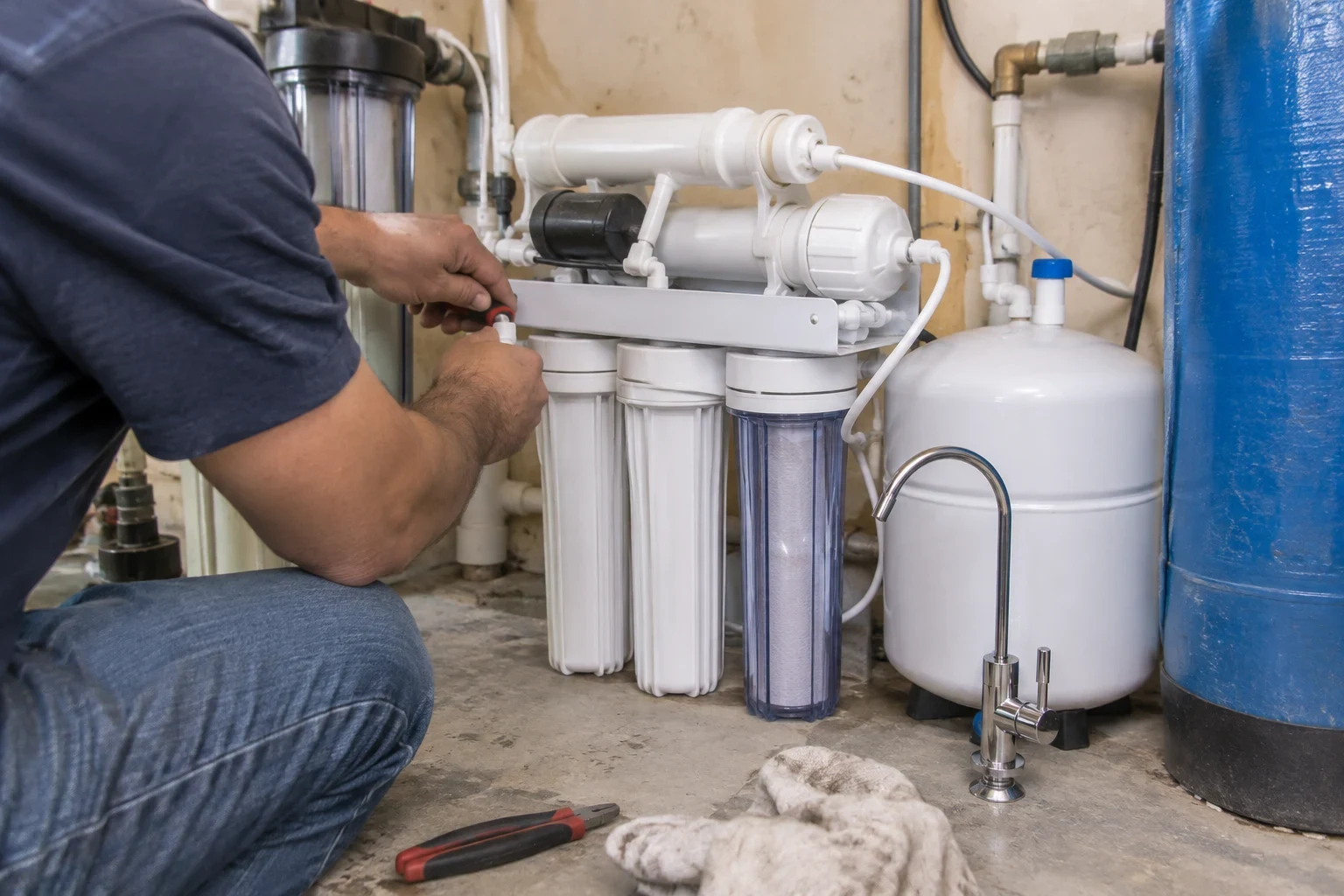
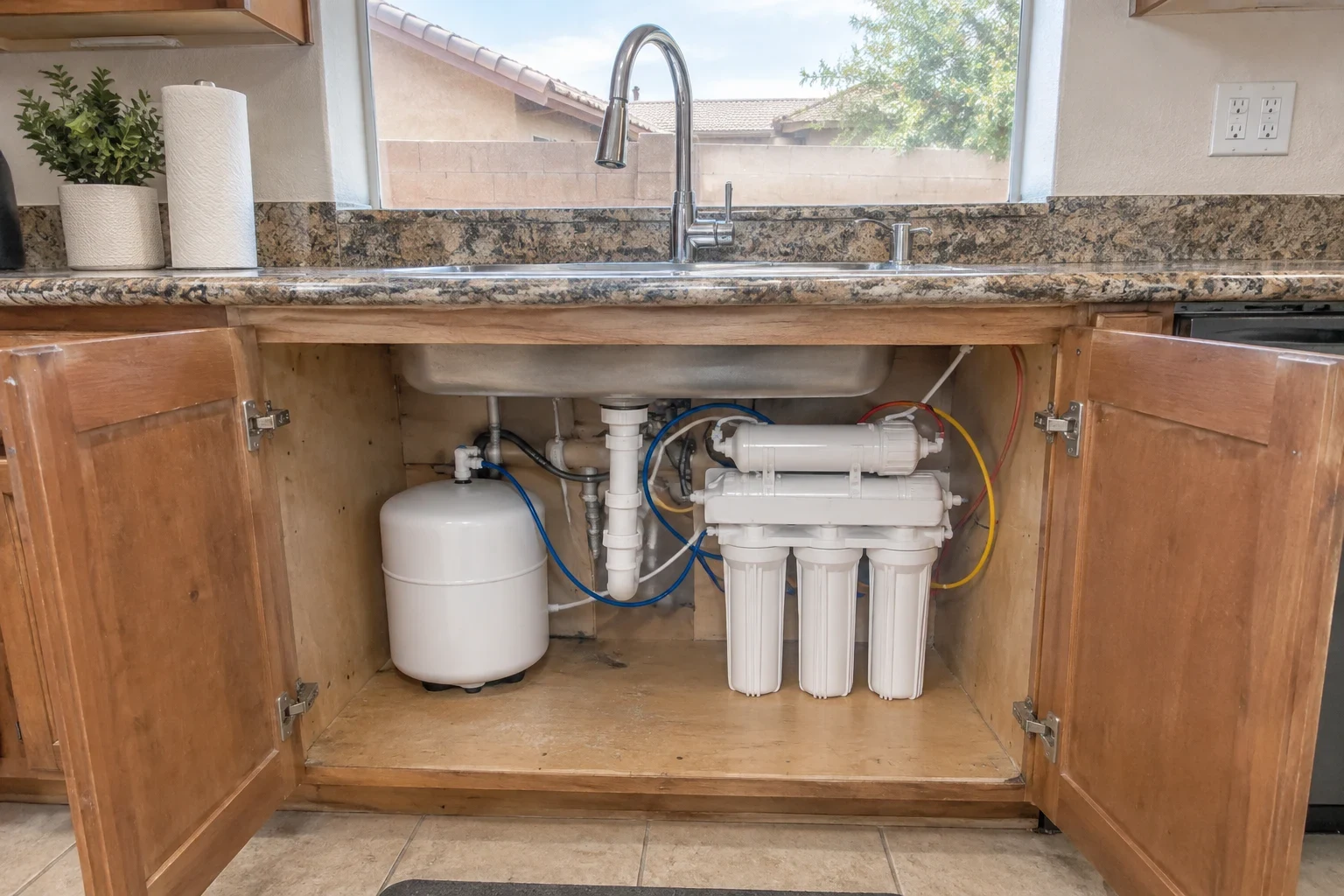
Our under-sink reverse osmosis setups route the water you drink and cook with through a sediment cartridge, a carbon block and a membrane, then out a faucet of its own. Before we arrive, you know the arrival window and how long the job should run, and we phone you if either changes.
What an RO system does at your kitchen sink
Inside the membrane housing, a thin-film composite sheet does the real work. Under line pressure, water is forced through openings small enough to stop most dissolved minerals, salts and metals. Those solids are flushed to the drain with a stream of reject water, while the clean side fills a small pressurized tank under the sink and waits there until you open the faucet.
It is the right call when the problem is the glass in your hand: mineral taste, cloudy ice, crusted kettles, or wanting an extra barrier against trace contaminants. It is not a whole-house fix. For chlorine smell in the shower, look at Whole-Home Filtration. For scale on fixtures and water heaters, Water Softener Installation does that job.
Calcium is the membrane's main wear item. The supply around Buckeye tends to carry plenty of it, and over months that calcium settles as a thin crust on the membrane surface and slows production. Feed the unit softened water and the surface stays cleaner, so the membrane usually keeps making water at a useful rate for longer.
What the installation includes
Sediment and carbon prefilters
The first cartridge catches sand and loose pipe scale. The carbon block removes chlorine or chloramine, which would otherwise break down the polyamide layer of the membrane.
Membrane housing and storage tank
We mount the membrane and a bladder tank that holds an air charge, so stored water reaches the faucet with usable pressure. We check that air charge before the tank fills for the first time.
Dedicated faucet
The faucet goes into an existing sprayer or soap hole when there is one. If not, we drill the sink deck or countertop, and we tell you on the phone which material we expect to drill.
Drain saddle and automatic shutoff
A saddle clamp on the drain pipe, above the P-trap, carries reject water out. When the storage tank reaches full pressure, a shutoff valve closes the feed, so the unit stops sending water down the drain while it sits idle.
Optional refrigerator or ice maker line
If you want filtered ice, we run tubing from the RO to the fridge connection. We explain how the longer line affects pressure at the dispenser before we commit to it.
Signs an RO system fits your home
Bottled water stacking up
If you haul cases or refill jugs every week, an under-sink system makes that water at your own tap.
Flat or bitter coffee and tea
Dissolved solids dull flavor and leave a film on the cup. Removing most of them changes the taste more than a carbon pitcher can.
White crust in kettles and ice trays
Scale on a kettle's heating plate or in the ice maker is the same mineral load you are drinking.
Older plumbing you are unsure about
Old brass fittings and solder can add metals at the tap. A membrane gives an extra barrier for the water you drink and cook with.
An existing RO that drains nonstop
A failed shutoff valve or a tank that has lost its air charge can send water to the drain for hours. That is often a repair, not a replacement, and we will tell you which one it is.
How install day runs
- 1
Phone call and scheduling
We ask about your sink, countertop material, cabinet space and whether you want a fridge line. Then we give you an arrival window and an honest estimate of how long the job will take.
- 2
Arrival and layout
If we are running behind, we call before your window closes, not after. On site we clear the cabinet, put down a mat and confirm there is a working cold-water shutoff and room for the tank.
- 3
Install and leak check
We fit the feed water adapter on the cold line, mount the filter assembly, set the faucet and connect the drain saddle. Every push-fit joint is seated and checked with the system under pressure.
- 4
Flush and walkthrough
New carbon releases fine dust and new membranes need flushing, so we drain the first tank before you drink from it. Then we show you the shutoff, the filter order and when each cartridge is due.
What moves the price of an RO system
Once you tell us about your sink, cabinet and countertop, we can price the job over the phone. The quote lists parts and labor separately, so you can see where each dollar goes. These four details change it the most.
- Tank or tankless design
- Tank systems are simpler and have fewer parts to fail. Tankless units with a built-in pump save cabinet space but need an outlet under the sink.
- Countertop drilling
- A sink with an open hole is quick. Quartz and granite need a diamond bit, water cooling and more time.
- Extra stages and lines
- A remineralization cartridge, a permeate pump or a refrigerator line each add parts and labor.
- Line pressure
- A membrane needs enough incoming pressure to produce water at a useful rate. Low pressure can call for a booster pump, which adds cost and needs power at the cabinet.
Reverse osmosis questions
Something not covered here? (623) 240-9305
How long does an install take?
A standard under-sink install with an existing faucet hole usually takes a couple of hours. Drilling stone, adding a fridge line or fitting a booster pump adds time. We tell you the expected length when we schedule, so you can plan the rest of your day.
Does reverse osmosis waste water?
Yes, some. Every system sends a share of the water it processes to the drain along with the rejected minerals. The ratio depends on the membrane and your water pressure. A permeate pump and a working shutoff valve both reduce it, and we can talk through either option on the phone.
How often do the filters need changing?
Plan on fresh sediment and carbon prefilters roughly every twelve months. If grit or loose pipe scale reaches the system, the sediment stage clogs early and you will notice the faucet slowing down. The membrane outlasts the prefilters by a wide margin, though hard water wears it faster. At the walkthrough we write out the change schedule for your exact unit.
Will RO take out minerals I want to keep?
It removes most dissolved minerals, including calcium and magnesium. Many people prefer the cleaner taste anyway. If yours tastes flat, a remineralization cartridge after the membrane adds a small amount back.
Do I need a softener for an RO system to work?
No, the RO works on its own. Hardness does scale the membrane faster, so a softener upstream helps it last. If you keep that softener stocked through Automated Salt Delivery, warranty labor is free while your salt delivery subscription stays active.
Set up your RO install on a day that works
Tell us about your sink and countertop, and we will give you a quote by phone and an arrival window you can plan around. We install in Buckeye and nearby towns, including Goodyear, Avondale and Litchfield Park.