ServicesWater Softener Installation
Water Softener Installation in Buckeye
Hard water leaves white crust on fixtures and scale inside water heaters. We install a softener sized to your household, plumb it with a bypass valve and drain air gap, and give you a firm arrival window so you know exactly when to be home.
What a softener does and when it makes sense
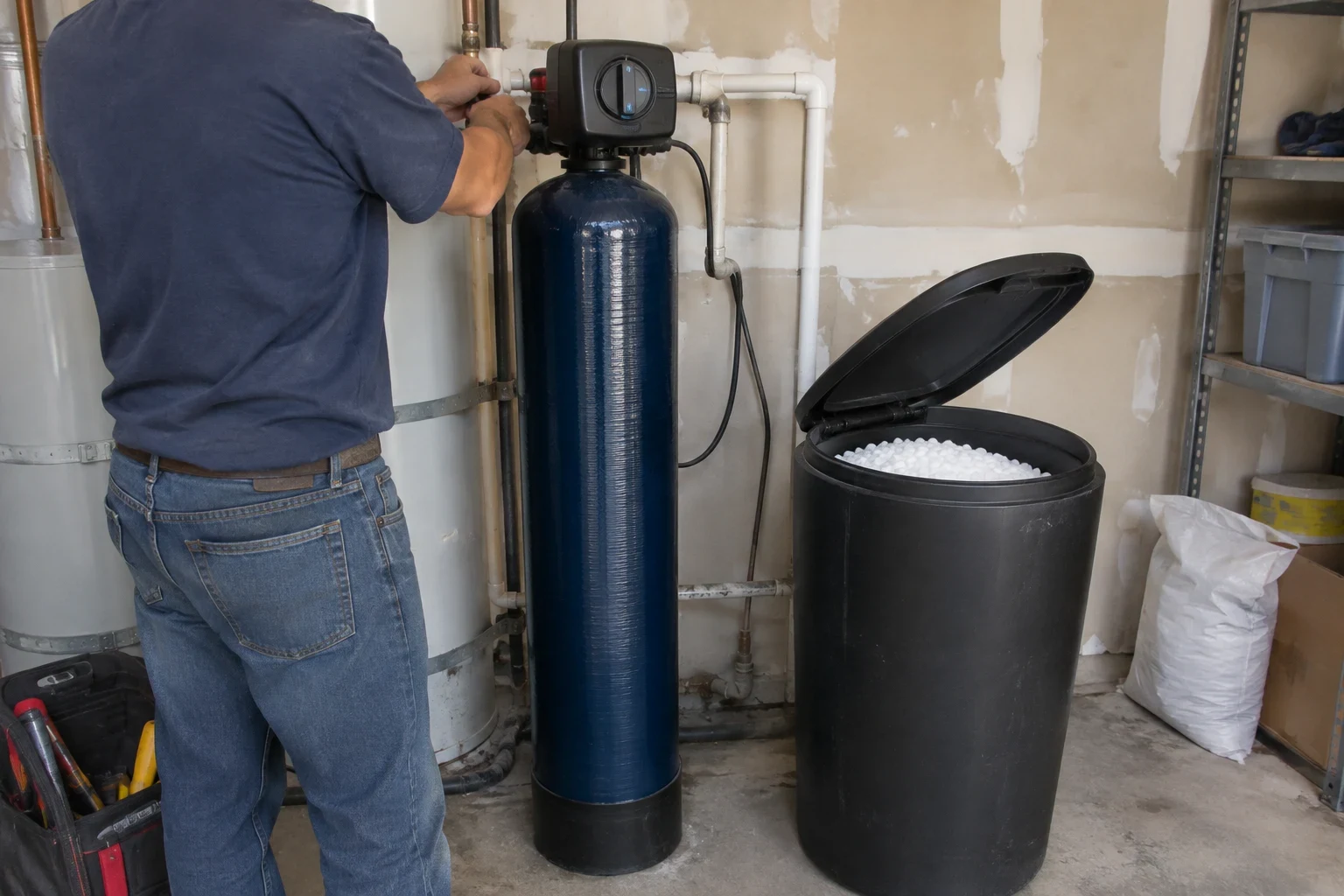
A softener removes calcium and magnesium by ion exchange. Water passes through a tank of resin beads that hold sodium or potassium ions, and the hardness minerals swap places with them. When the resin is loaded, the control valve runs a regeneration cycle that flushes it with brine from the salt tank and sends the minerals down the drain.
Water across the West Valley runs hard, so most homes here benefit. It is the right call when you see spotting on glass, crust on showerheads, stiff laundry or a water heater that pops and rumbles as scale builds on the bottom of the tank.
We schedule installs around your week, not ours. You get a realistic time on site, an arrival window, and a call from us if anything shifts.
What the installation includes
- Sizing by grain capacity
- We match the resin tank to how many gallons your household uses each day and to your utility's published hardness figure. Too small a unit regenerates constantly and burns through salt. Too large a unit leaves resin idle long enough to channel.
- Connecting to your loop
- Plenty of Arizona garages already have a softener loop stubbed out. We tie into it and add a three-valve bypass, which lets you route water around the softener for service while the rest of the house keeps running. No loop in place? We describe the added piping before anything gets cut.
- Drain line with an air gap
- Brine and rinse water from each regeneration exits to a drain across a code-style air gap, so discharge can never be pulled back into the unit.
- Programming the control valve
- On a metered valve we enter your hardness, regeneration hour and salt dose, so the unit cleans its resin based on gallons actually used rather than a calendar timer.
- Startup and walkthrough
- We add salt and water to the brine tank, trigger the first regeneration and inspect each fitting for drips. Then we show you where the bypass is and what the numbers on the valve display mean.
Signs your home needs a softener
White crust on fixtures
Calcium carbonate dries into chalky rings on faucets, showerheads and the edges of sinks.
Spotty dishes and glass shower doors
Each droplet that evaporates leaves its minerals behind, building a cloudy film that comes back days after you scrub it off.
A noisy or slow water heater
Scale settles on the tank bottom or coats tankless heat exchangers, so the burner works harder and you may hear popping.
Suds that disappear fast
Calcium and magnesium react with soap and turn it into curd instead of foam. You end up pouring extra detergent and shampoo, and towels and clothes dry scratchy.
An aging softener that can't keep up
Resin beads break down after years of cycling, and older timer valves regenerate on schedule even when no one used water. A new metered unit often pays back part of its cost in salt saved.
How install day runs
- 1
Phone conversation
We ask about household size, your current setup and whether a loop is in place, then book a date and give you an arrival window.
- 2
Arrival and setup
We lay down protection in the garage or utility area, shut off the main, and drain the line. If our day runs long on an earlier job, we call before your window opens, not after.
- 3
Plumbing and drain
We set the resin and brine tanks on a level base, connect the bypass, run the drain line with its air gap, and add an overflow line from the brine tank.
- 4
Startup and check
We restore water slowly to purge air, program the valve, run a regeneration, and watch every joint under pressure. Most installs on an existing loop take part of a day.
What moves the price
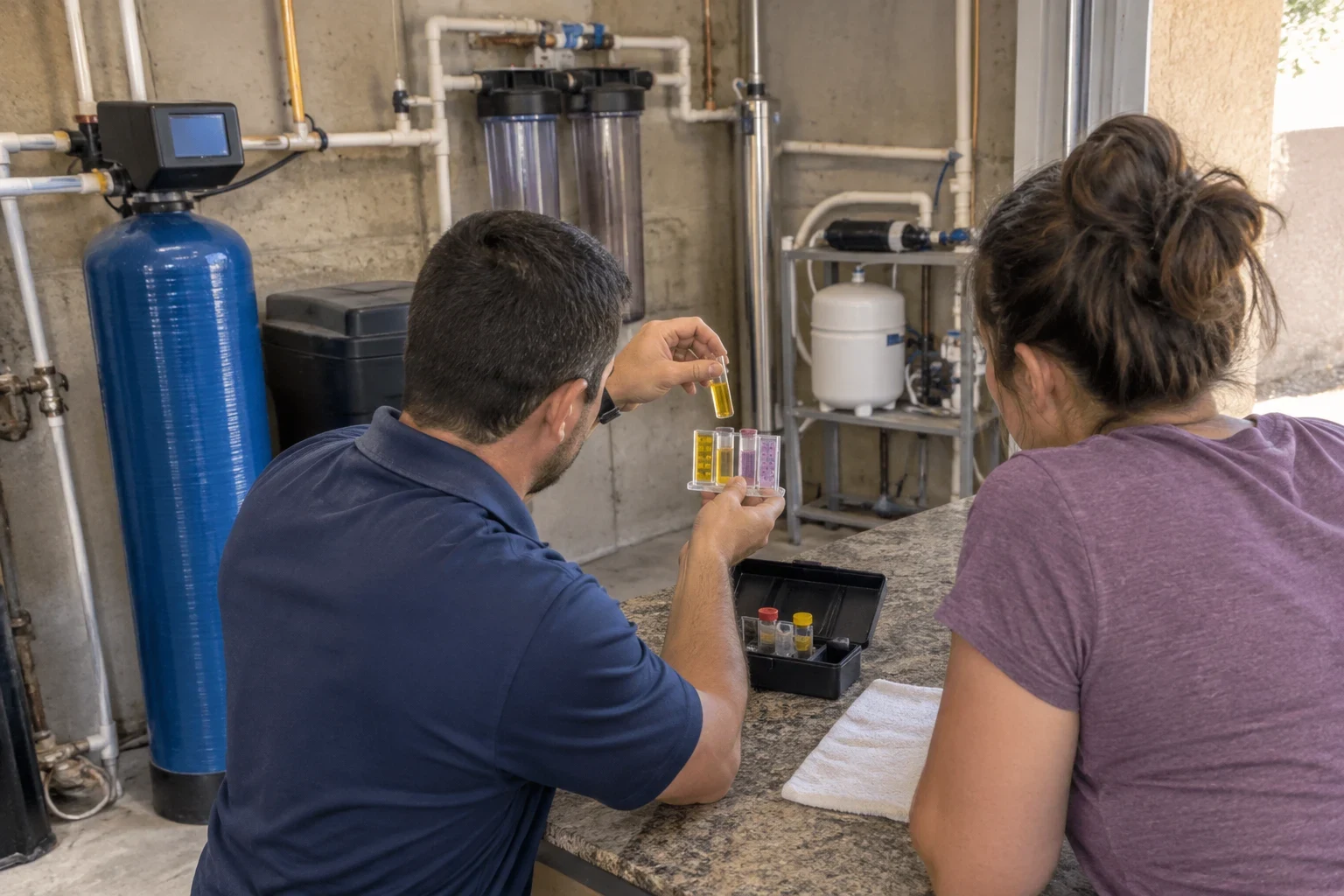
Your quote depends on the equipment and on what we find where it goes. We walk you through each piece by phone so the number makes sense before we schedule.
- Unit size and valve type
- Higher grain capacity and metered, demand-based valves cost more up front than small timer units but use less salt and water.
- Loop or new plumbing
- Connecting to an existing loop is straightforward. Running new lines through a garage wall or attic adds time and materials.
- Drain access
- A nearby laundry standpipe or floor drain keeps it simple. A long drain run adds piping.
- Removing an old unit
- Hauling away an old softener and its brine tank adds a little labor.
Water softener installation questions
Something not covered here? (623) 240-9305
How long will my water be off?
On an existing loop, usually a couple of hours while we connect the tanks. New plumbing takes longer. We tell you the expected window when we book, and you can still use water once the bypass is open if we need to pause.
Should I use sodium chloride or potassium chloride?
Both work in the same valve. Potassium chloride costs more and you may need a higher salt dose setting, but some people prefer it to keep sodium out of their water. We program the valve for whichever you choose.
Will a softener lower my water pressure?
A correctly sized unit with properly sized fittings causes very little pressure drop. Pressure problems usually come from an undersized tank or restrictive connections, which is why we size from your actual water use.
Do I still want a reverse osmosis system?
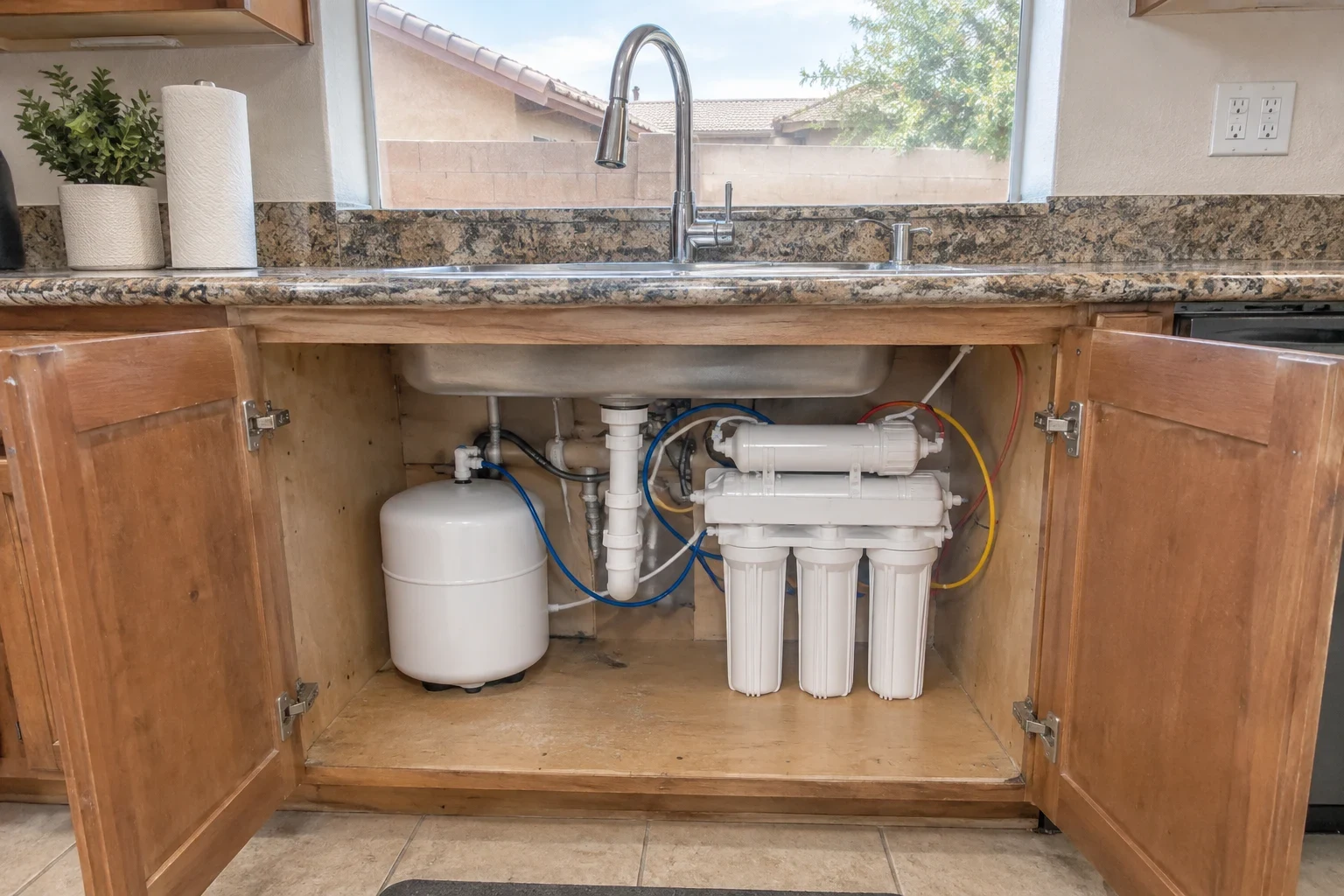
A softener handles hardness, not dissolved salts or taste. Many homes pair it with a reverse osmosis system at the kitchen sink for drinking water, and softened water helps an RO membrane last longer.
Is warranty labor covered?
If you keep an active Automated Salt Delivery subscription, warranty labor on your softener is free. The subscription also keeps the brine tank stocked so the resin regenerates fully.
Ready to stop scrubbing scale?
Tell us about your home and current plumbing, and we will size the softener and book a day that fits your calendar. You'll know the arrival window before we hang up.