ServicesWhole-Home Filtration
Whole-Home Filtration in Buckeye
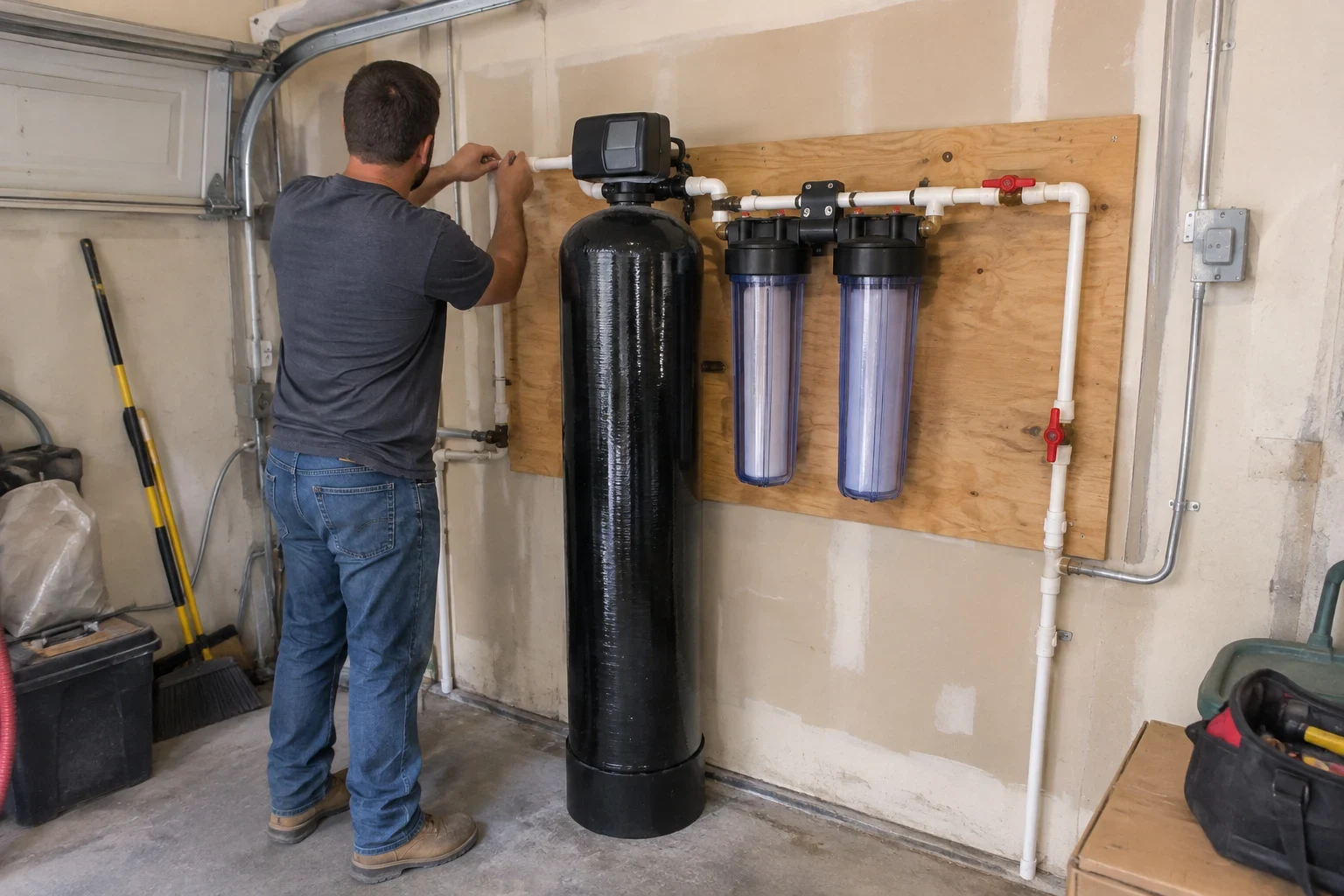
We add a carbon filtration system to your main water line, so the shower, kitchen tap, washer and water heater all get water with the chlorine odor and sediment taken out. We book a date we can keep, give you a firm arrival time and phone ahead if the day changes.
How point-of-entry filtration works, and who it suits
This kind of system treats water once, at the point where it enters, and everything past that point gets filtered water. It mounts on the main line, close to where the supply comes into your home. A typical setup has two stages: a sediment prefilter followed by a tank of activated or catalytic carbon. The first stage catches sand and flakes of pipe scale. The carbon then holds onto chlorine or chloramine, the disinfectants utilities add, plus the taste and odor compounds tied to them.
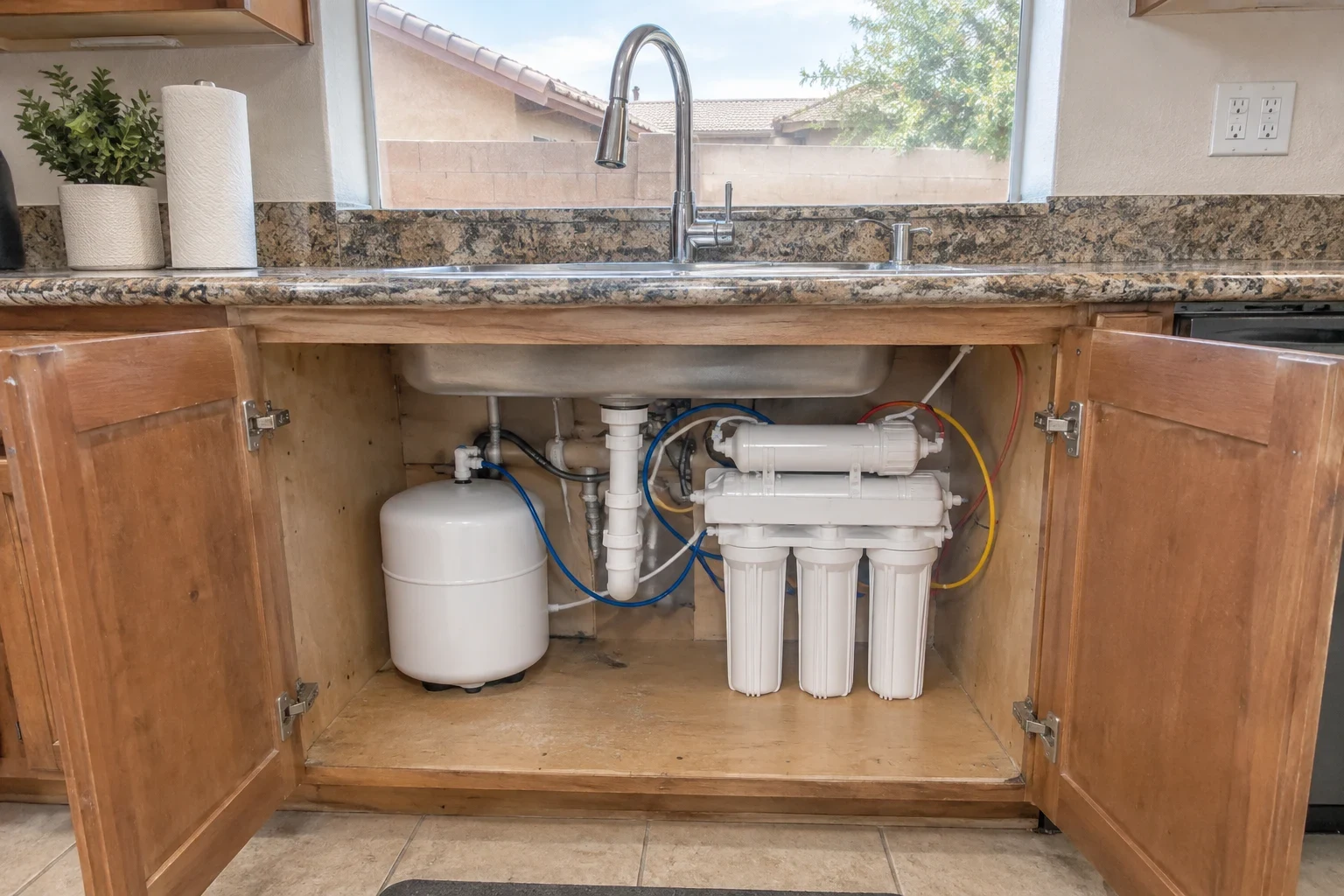
Choose it when the problem shows up in every room: a swimming pool smell while you shower, skin that feels tight afterward, or a flavor that turns up in ice and coffee both. It will not soften anything. Calcium and magnesium, the minerals behind white crust on faucets, pass right through carbon, so if scale is your issue, see our water softener installation page; plenty of homes use both. For drinking and cooking water treated to a finer level, a reverse osmosis system at the kitchen sink does that job better.
What the install includes
- Sizing to your flow rate
- We match the tank to the gallons per minute your home pulls at its busiest, judged by bathrooms and fixtures. A carbon bed that is too small lets chlorine pass and sags in pressure when two showers run together.
- Sediment prefilter
- A cartridge housing mounted before the carbon tank stops sand and loose scale. Keeping that debris out prevents the carbon from fouling and stretches its working life.
- Carbon tank and control head
- The tank goes on a flat, stable pad, then we fit either a backwashing valve or an upflow head to suit the system. Either one keeps the media loose so water cannot cut channels through it.
- Bypass valve and fittings
- Each system gets a bypass, so water can skip the tank when it needs service. We tie into copper or PEX using fittings sized to the line you already have.
- Placement with an existing softener
- When a softener is already in place, the carbon tank is plumbed upstream of it. Chlorine slowly degrades softener resin, so removing it first helps the resin hold up.
- Startup and cleanup
- We rinse out the fine carbon dust, inspect each joint for drips, program the valve and take away the boxes and old fittings.
When whole-home filtration makes sense
Showers that smell like a pool
Hot water lets chlorine escape as vapor, and a shut bathroom holds it in. A kitchen faucet filter does nothing for the water from your showerhead.
Tight skin and dull hair
Chlorine pulls away the natural oils that keep hair and skin soft. Plenty of people feel the difference right after leaving a house with filtered water.
Debris in screens and aerators
Sand or tiny flakes collecting in faucet aerators and washing machine inlet screens mean sediment is moving through your pipes. A prefilter catches it before it wears down valves and appliance solenoids.
Ice and coffee taste off
When every drink has a hint of chlorine, a pitcher filter is trying to clean your entire supply one jug at a time. Filtering at the main line corrects the taste at every tap.
Softener resin wearing out too soon
Chlorine is a frequent reason resin loses capacity or breaks down early. Putting a carbon tank ahead of the softener protects a new resin bed.
How the job day runs
- 1
Quote and scheduling by phone
On the call we ask about square footage, bathroom count, pipe material and where your main comes in. Then we price the system and offer an install date we are confident we can keep.
- 2
Arrival time and updates
You get a defined arrival time for install day. If the job before yours runs over or a part is held up in shipping, we phone you ahead of that time so you are not left waiting.
- 3
Shutoff and plumbing
We close the main, install the bypass and plumb in the prefilter and carbon tank. Plenty of newer Buckeye houses already have a softener loop in the garage, which makes this part quicker. Expect the water to be off for a few hours.
- 4
Flush, pressure check and walkthrough
We run water through the carbon until it comes out clear, test pressure at a faucet, and walk you through the bypass and the prefilter cartridge change schedule.
What moves the price
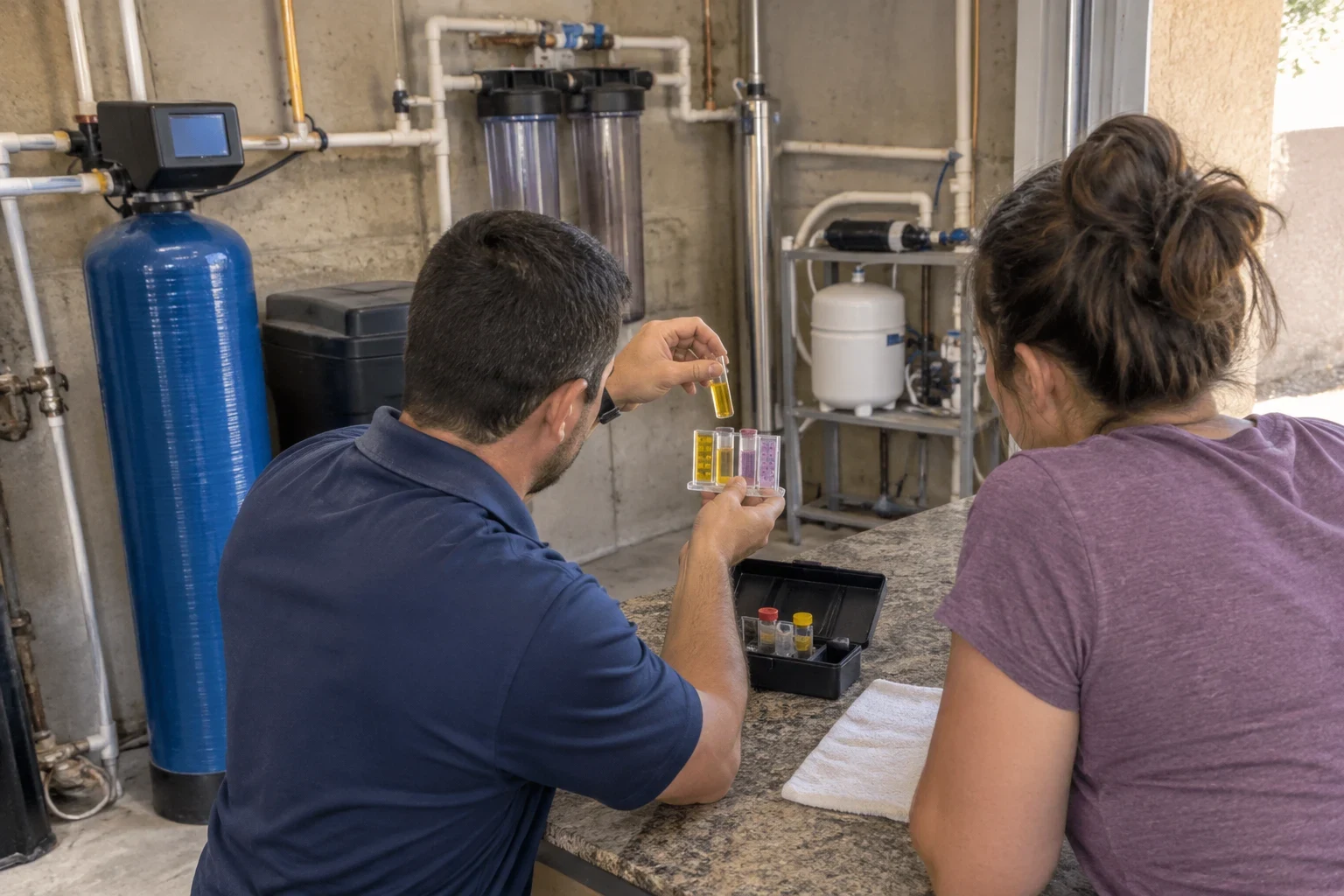
Every quote is written to your home, not a flat package. Most of the spread comes from system size and how much plumbing it takes to reach a good spot. We explain each line on the phone so nothing turns up on install day you did not hear about first.
- Tank size and media
- Larger homes with more bathrooms need a bigger carbon bed to keep flow up. Catalytic carbon, used where the city treats with chloramine, costs more than standard activated carbon.
- Existing loop or new plumbing
- A ready softener loop means a short connection. No loop means running new line from the main, which adds time and material.
- Line size and pipe material
- A one-inch main needs larger valves and fittings than a three-quarter-inch line. Older copper may need extra work to get a clean joint.
- Location and protection
- An install outside the garage may need a cover to shield the tank and valve from direct sun and heat.
Common questions about whole-home filters
Something not covered here? (623) 240-9305
Does a whole-house filter lower water pressure?
Not noticeably, provided the tank matches your peak demand. Pressure loss usually traces back to an undersized carbon bed or a clogged sediment cartridge. We size by your fixture count and show you what a cartridge due for replacement looks like before we go.
Will a carbon filter do a softener's job?
No. Carbon takes out chlorine and its taste and smell, but calcium and magnesium pass straight through. For both, the filter sits first on the line with the softener after it.
How often is the carbon replaced?
That depends on tank size and your household's water use. You will swap the sediment cartridge far more often than the carbon. We leave you with a replacement schedule for your system.
Is warranty labor included?
Active salt delivery subscribers get free warranty labor from us. If you already use our automated salt delivery for a softener, ask during your call how it applies to a new whole-home filter.
How long will the water be shut off?
Expect a few hours. Along with your arrival time, we tell you roughly when the main goes off, so you can fit showers and laundry around it.
Choose the day your filter goes in
Describe the smell, taste or grit you are dealing with and roughly how your home is plumbed. We will price the system over the phone and book an arrival time that lets you plan the rest of your day.